

What is the refractive index of Antioxidant 1098?
As a reliable supplier of Antioxidant 1098, I often encounter various inquiries from customers about this product. One question that has come up more frequently lately is about the refractive index of Antioxidant 1098. In this blog post, I will delve into this topic, providing a detailed explanation of what the refractive index is, its significance for Antioxidant 1098, and other related aspects.
Understanding the Refractive Index
The refractive index is a fundamental optical property of a substance. It is defined as the ratio of the speed of light in a vacuum to the speed of light in the substance. Mathematically, it can be expressed as (n = \frac{c}{v}), where (n) is the refractive index, (c) is the speed of light in a vacuum ((c\approx 299,792,458\ m/s)), and (v) is the speed of light in the medium.
When light passes from one medium to another with a different refractive index, it changes direction. This phenomenon is known as refraction. The refractive index is influenced by several factors, including the wavelength of light, temperature, and the chemical composition and structure of the substance.
Refractive Index of Antioxidant 1098
Antioxidant 1098, chemically known as N,N'-Hexane-1,6-diylbis[3-(3,5-di-tert-butyl-4-hydroxyphenyl)propionamide], is a well - known hindered phenolic antioxidant. It is widely used in the polymer industry to prevent the oxidation of polymers, thereby extending their service life and maintaining their physical and mechanical properties.
The refractive index of Antioxidant 1098 can vary slightly depending on the measurement conditions. Generally, at a specific wavelength (usually the sodium D - line, (\lambda = 589.3\ nm)) and a standard temperature (e.g., (20^{\circ}C) or (25^{\circ}C)), the refractive index of Antioxidant 1098 is approximately in the range of 1.53 - 1.55.
This value is determined through precise optical measurements using instruments such as a refractometer. The refractometer measures the angle of refraction of light passing through a sample of Antioxidant 1098 and calculates the refractive index based on Snell's law ((n_1\sin\theta_1=n_2\sin\theta_2), where (n_1) and (n_2) are the refractive indices of the two media, and (\theta_1) and (\theta_2) are the angles of incidence and refraction, respectively).
Significance of the Refractive Index for Antioxidant 1098
- Quality Control: The refractive index is an important parameter for quality control in the production of Antioxidant 1098. A consistent refractive index within a specified range indicates that the product has a stable chemical composition and structure. Any significant deviation from the standard refractive index value may suggest impurities, incorrect synthesis, or degradation of the antioxidant.
- Compatibility with Polymers: In polymer applications, the refractive index of Antioxidant 1098 can affect its compatibility with different polymers. When the refractive index of the antioxidant is close to that of the polymer matrix, it can lead to better dispersion and transparency of the polymer - antioxidant system. This is particularly important in applications where optical clarity is required, such as in the production of transparent plastics.
- Characterization and Identification: The refractive index is a characteristic property of Antioxidant 1098. It can be used in combination with other physical and chemical properties, such as melting point, density, and infrared spectroscopy, to accurately identify and characterize the antioxidant.
Comparison with Other Antioxidants
It is interesting to compare the refractive index of Antioxidant 1098 with other commonly used antioxidants. For example, Antioxidant 1330, which is a high - molecular - weight hindered phenolic antioxidant, may have a different refractive index due to its different chemical structure. Similarly, Water Soluble Antioxidant and Antioxidant B225 also exhibit unique refractive index values based on their specific compositions.
The differences in refractive index among these antioxidants can influence their performance and applications. For instance, antioxidants with different refractive indices may have different effects on the optical properties of polymers, which in turn can affect the suitability of the polymer - antioxidant system for different end - uses.
Our Supply of Antioxidant 1098
As a leading supplier of Antioxidant 1098, we are committed to providing high - quality products. Our Antioxidant 1098 is produced under strict quality control measures, and we ensure that the refractive index and other physical and chemical properties are within the specified standards.
We have a large - scale production facility that allows us to meet the diverse needs of our customers, whether they require small - scale samples for research and development or large - volume orders for industrial production. Our experienced technical team is also available to provide technical support and advice on the application of Antioxidant 1098.

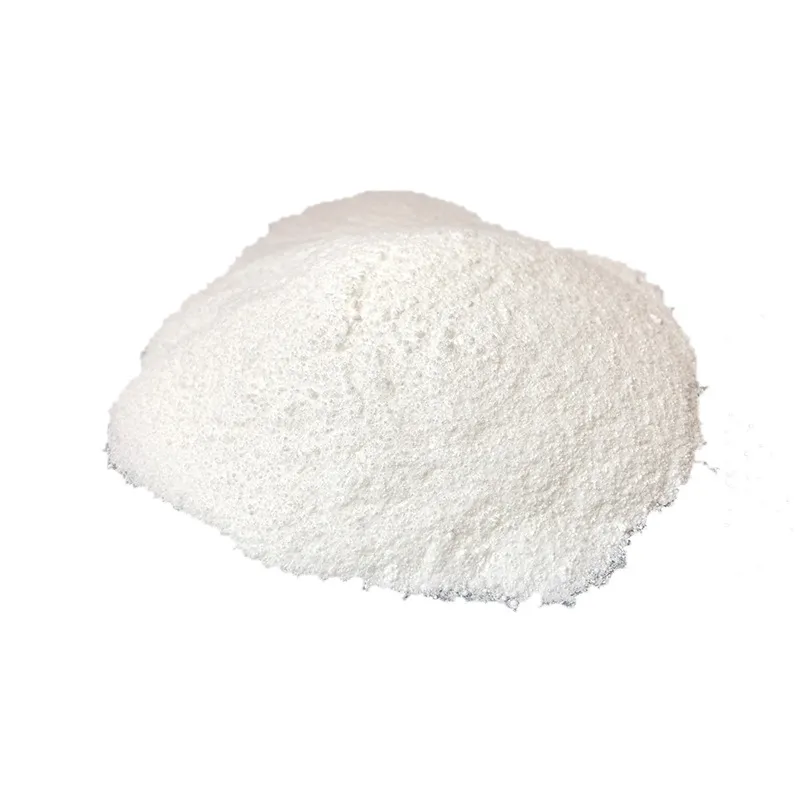
Why Choose Our Antioxidant 1098?
- Quality Assurance: We use advanced production technology and strict quality control systems to ensure the high quality and stability of our Antioxidant 1098. The consistent refractive index and other properties guarantee the reliable performance of the antioxidant in various applications.
- Competitive Pricing: We offer competitive prices without compromising on quality. Our efficient production processes and cost - control measures enable us to provide cost - effective solutions to our customers.
- Customized Service: We understand that different customers may have different requirements. We can provide customized packaging, delivery options, and technical support to meet the specific needs of each customer.
Contact Us for Purchase and Negotiation
If you are interested in purchasing Antioxidant 1098 or have any questions about its refractive index, application, or other aspects, please feel free to contact us. We are eager to have in - depth discussions with you and provide you with the best solutions. Our team is dedicated to helping you find the most suitable antioxidant products for your business.
References
- "Handbook of Polymer Additives" by George Wypych.
- Journal articles on the physical and chemical properties of hindered phenolic antioxidants.
- Technical data sheets of Antioxidant 1098 from relevant chemical manufacturers.